Connect with us

News

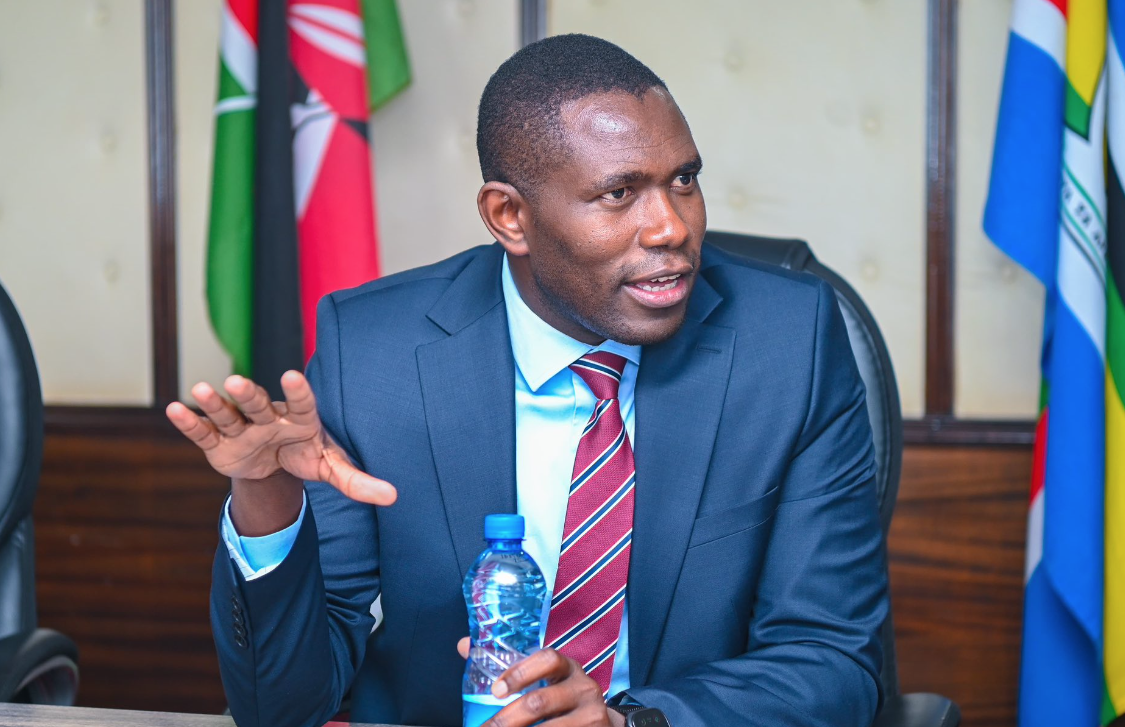
PS Oluga: Kenya has trained 2,200 health workers to handle Ebola

Published

on

Kenya has trained 2,200 health workers to strengthen the country’s preparedness against Ebola outbreaks, Principal Secretary for Medical Services Ouma Oluga has said.

Oluga said the government has intensified screening, training and case management measures to prevent the disease from crossing into Kenya.

He noted that Kenya has been building its Ebola response capacity for years, with medical personnel receiving specialised training whenever outbreaks occur in neighbouring countries.

“Health workers need to be properly trained and properly prepared. So far, in just this specific incident, we’ve trained around 800. But overall, we’ve trained around 2,200 health workers. We have had Ebola scares for quite some time. Uganda has had its ninth outbreak. Every time there is an outbreak, Kenyan health workers are trained,” he said.

Oluga revealed that he was among 90 Kenyan doctors who were trained at the Rwanda-DRC border during an Ebola outbreak in 2013, emphasising that the country has continuously invested in preparedness.

The PS said the government is maintaining a high index of suspicion for anyone who has travelled from the Democratic Republic of Congo (DRC) or Uganda within the last 21 days.

“Every single citizen should help the country in its responsibility to protect itself,” he said.

He urged Kenyans to be vigilant and report suspected cases, especially among people arriving from Ebola-affected regions.

According to Oluga, Ebola symptoms include headaches, fever, body weakness, diarrhoea and, in severe cases, bleeding from various parts of the body.

He disclosed that a recent Ebola scare involving a Turkish tourist turned out negative after health authorities moved swiftly to test the individual following a report by a private doctor.

“I think that high index of suspicion from the doctor and from the general public is good because it helps us to test that person,” he said.

Oluga said members of the public can report concerns through the government’s Ebola hotline, 719.

The PS also outlined the country’s preparedness measures, including surveillance at all 26 points of entry, contact tracing, screening and the establishment of isolation facilities.

He explained that hospitals designated to handle Ebola cases must have dedicated isolation areas, adequate personal protective equipment (PPEs) for healthcare workers and specialised infectious disease units with controlled airflow systems.

“These people must be separated from other patients from the moment somebody thinks that this could be Ebola,” he said.

Oluga added that facilities that are unable to manage Ebola cases are required to isolate patients before transferring them through specially equipped isolation ambulances.

He called on healthcare workers to remain calm and committed during disease outbreaks, describing them as the country’s first line of defence.

“During an outbreak like this, we are the KDF. We are the defence of the country,” he said.

While acknowledging concerns raised by healthcare workers over safety, Oluga said discussions should focus on ensuring frontline workers have adequate protective gear, including hazmat suits, gloves and N95 masks.

He noted that while vaccines and treatment exist for some Ebola strains, the current strain remains a challenge because it does not yet have a vaccine.

Oluga urged the country to prioritise public awareness and preparedness, saying citizens, health workers and government agencies all have a role to play in preventing a potential outbreak.

“I am almost begging the country that we go back to that conversation where we can start training people on what they need to do as citizens and what is important for all of us,” he said-STAR.

Continue Reading
Click to comment

Leave a Reply

Your email address will not be published. Required fields are marked *

News

National Assembly dismisses claims Sacco Bill is being rushed through Parliament

Published

on

The National Assembly has dismissed reports that the Sacco Societies (Amendment) Bill, 2025, is being rushed through Parliament, saying the proposed law is still undergoing public participation.

Through infographics shared on Facebook on Tuesday, July 14, 2026, Parliament said misleading information had been circulating online about the Bill, formally known as the Sacco Societies (Amendment) Bill, National Assembly Bill No. 32 of 2025.

Bill was published in June 2025

The National Assembly said the Bill was published on June 30, 2025, and had remained under consideration for more than 12 months.

It rejected suggestions that lawmakers were fast-tracking the proposed amendments without allowing enough time for scrutiny.

According to Parliament, the lengthy period between the publication of the Bill and its current consideration shows that it is not being rushed.

Bill currently before the National Assembly committee

The Sacco Societies Amendment Bill is currently before the National Assembly’s Departmental Committee on Trade, Industry and Cooperatives.

The committee is conducting public participation and receiving views from members of the public and other stakeholders.

The submissions are expected to help the committee assess the proposed amendments before presenting its recommendations to the National Assembly.

What happens after public participation?

After the public participation process is concluded, the committee will prepare a report containing its findings and recommendations.

Parliament said the views submitted by members of the public and stakeholders could inform further amendments to the Bill.

The proposed legislation will then proceed to the National Assembly for consideration by MPs.

This means the Bill has not yet completed the legislative process and could still be amended based on the submissions received during public participation.

Bill will be forwarded to Senate

The National Assembly also clarified that the Bill will not proceed directly for presidential assent after being passed by MPs.

Because the proposed legislation concerns county governments, it will be forwarded to the Senate for consideration in accordance with the Constitution.

The Senate will be required to consider the Bill before it can complete the parliamentary process and be presented for presidential assent.

Parliament urged members of the public to rely on verified information about the Sacco Societies Amendment Bill instead of unconfirmed reports circulating online-PeopleDaily.Digital.

Continue Reading

News

Digital house-hunting platform bets on technology to reshape Nairobi’s rental market

Published

on

NAIROBI, Kenya, July 14 – A growing shift towards digital property searches is changing how Kenyans find rental homes, with real estate technology platform Reemio positioning itself as a solution to longstanding challenges.

This included fraudulent listings, costly house searches and limited market transparency.

As younger, tech-savvy consumers turn to online platforms to make purchasing decisions, the company says digitizing the rental process could improve efficiency for both tenants and landlords while lowering transaction costs.

“Our niche is to solve the problem of house hunting and also bring trust into that process. We use technology to connect renters and landlords,” said Kimani.

Kimani said the platform seeks to address inefficiencies that have traditionally made house hunting expensive and time-consuming.

Instead of physically visiting multiple properties, users can browse verified listings, take virtual tours, compare amenities and access information on additional costs such as water charges, electricity bills and service fees before scheduling physical viewings.

Beyond improving convenience for tenants, Reemio argues that technology can help landlords reduce marketing costs, shorten vacancy periods and reach a wider pool of prospective tenants, including Kenyans living abroad.

The company says its platform also generates market data that can help property owners and developers better understand evolving consumer preferences, although its long-term impact will depend on wider adoption of digital property platforms and continued investment in trustworthy online real estate marketplaces-Capitalfm.co.ke.

Continue Reading

News

ORPP edges two parties closer to joining Kenya’s political arena

Published

on

The Office of the Registrar of Political Parties (ORPP) has issued a notice for the provisional registration of two proposed political parties, opening a seven-day window for members of the public to lodge objections.

In a notice published by the Registrar of Political Parties and Chief Executive Officer J.C. Lorionokou, the ORPP announced that the Social Democratic Party of Kenya (SDP) and the People’s Alternative Voice (PAV) are in the process of being provisionally registered under Section 5(2)(a) of the Political Parties Act.

The ORPP, a State office established under Section 33 of the Political Parties Act and Article 260 of the Constitution, said its mandate includes registering and regulating political parties as well as administering the Political Parties Fund.

According to the notice, the Social Democratic Party of Kenya (SDP) has adopted pink, white and sky blue as its official party colours, with the slogan “Change – Mageuzi.” The party’s symbol is the acronym SDP enclosed inside a circle.

The party’s listed founder members are Nyangong’ Duncan Nyumbah, Omwandasi Jared Dishon and Kinyua Mary Wacuka.

The founders of PAV are listed as Odenyo John Fitzgerald Elly, Nyando Rachel Mmboga and Ali Hussein Kiplangat.

The Registrar said particulars of the two proposed political parties have been published on the ORPP website to facilitate public scrutiny as required by law.

Any person wishing to oppose the provisional registration of either party has seven days from the date of publication of the notice to submit objections either in writing or in person to the Office of the Registrar of Political Parties at Lion Place, Fourth Floor, Waiyaki Way at Karuna Close, Nairobi.

The provisional registration marks the first step in the legal process of establishing a political party in Kenya.

Kenya has 91 fully registered political parties. The ORPP’s updated register indicates that, as of January 2026, there were 91 parties that had met the legal requirements for full registration under the Political Parties Act-STAR.

Continue Reading

Trending