Connect with us

News

Why Kenya retirement future depends on saving more today

Published

on

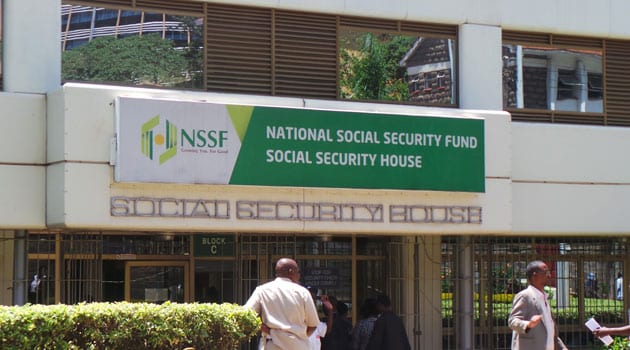
Higher National Social Security Fund contributions are reducing take-home pay for thousands of Kenyan workers, but financial experts say the changes could play a critical role in protecting future retirees from financial hardship and dependence in old age.

The phased implementation of enhanced contribution rates under the NSSF Act, 2013, has generated mixed reactions among workers and employers, with many expressing concern over the immediate impact on disposable income amid rising living costs.

However, retirement experts argue that the reforms should be viewed through a long-term lens.

“While the short-term pinch is real, the bigger picture tells a more hopeful story. The enhanced NSSF contributions represent a long-term investment in financial security for life after work,” said Vincent Ochoi, Head of Corporate Business at CIC Life Assurance.

The reforms come at a time when Kenya is grappling with a broader retirement challenge, one that extends beyond formal employment and raises questions about how millions of workers will sustain themselves after exiting the workforce.

Growing pressure on Kenya retirement system

For many years, retirement security in Kenya has relied heavily on family support, personal savings and continued economic activity well beyond retirement age.

However, changing economic realities and demographic shifts are placing increasing strain on these traditional support systems.

Improved healthcare and longer life expectancy mean many Kenyans are likely to spend between 15 and 25 years in retirement. During this period, retirees must continue meeting essential expenses such as healthcare, housing, food and daily living costs.

At the same time, urbanisation and changing family structures have reduced the ability of younger generations to fully support ageing relatives.

“The real challenge lies in the perception that retirement savings are a distant concern, easily postponed in favour of present needs,” Ochoi said.

“Yet many Kenyans will spend between 15 and 25 years in retirement and will require a reliable source of income during that period.”

According to retirement specialists, inadequate planning leaves many retirees vulnerable to financial instability, forcing some to depend on family members or continue working long after retirement.

“Without adequate planning, retirees risk becoming financially dependent on family members or struggling to meet basic needs. That is why structured retirement solutions are critical safeguards for long-term financial well-being,” Ochoi added.

Why higher NSSF contributions matter

The revised NSSF contribution framework seeks to increase the retirement savings accumulated by workers throughout their careers.

Historically, many employees reached retirement with relatively modest pension balances that were often insufficient to support their post-employment needs.

By increasing contributions gradually, policymakers hope to strengthen retirement outcomes and provide workers with more substantial financial resources when they eventually leave active employment.

Financial planners note that the benefits of pension contributions become more apparent over time as savings accumulate and investment returns compound.

The objective is not merely to increase deductions today but to improve financial security decades into the future.

The informal sector remains a major concern

While the NSSF reforms are expected to benefit workers in formal employment, experts warn that retirement security remains a significant challenge for the millions of Kenyans operating in the informal economy.

A substantial portion of the country’s workforce earns a living outside formal employment structures and does not benefit from mandatory pension contributions.

As a result, many self-employed professionals, small-scale traders, artisans and casual workers face the risk of reaching retirement age without sufficient savings.

“Retirement preparedness cannot rest on any single institution alone. Public pension schemes, private retirement plans and individual savings efforts must work together to create a resilient retirement framework,” Ochoi said.

Industry stakeholders have increasingly called for affordable and flexible retirement products capable of accommodating irregular income patterns common among informal sector workers.

Experts believe expanding retirement coverage beyond formal employment will be essential in building a financially secure ageing population.

Understanding pension accumulation

Pension plans are designed to help individuals build long-term financial security through regular contributions made during their working years.

These contributions are invested over time, allowing savings to grow and generate returns that contribute to the overall retirement fund.

Whether through employer-sponsored schemes or personal retirement arrangements, the goal remains the same: creating a dedicated pool of savings that can support an individual after active employment ends.

Financial advisers consistently emphasise the importance of starting early, noting that long-term investing allows individuals to benefit from the power of compounding.

The earlier a person begins saving, the greater the potential for wealth accumulation by retirement age.

Choosing an income strategy after retirement

When workers retire, they must decide how to convert their accumulated pension savings into sustainable income.

One common option is purchasing an annuity from a life insurance company.

An annuity provides a guaranteed stream of income, often through monthly payments, for the remainder of the retiree’s life. This arrangement offers certainty and protection from market fluctuations.

The alternative is income drawdown, which allows retirees to keep their savings invested while making periodic withdrawals according to their needs and within regulatory limits.

The approach provides greater flexibility and control but also exposes retirees to investment risk and the possibility of exhausting their funds if withdrawals are excessive or market performance is weak.

Industry experts advise retirees to carefully evaluate their financial goals, risk tolerance and expected retirement expenses before selecting either option.

Building retirement resilience

Analysts say improving retirement outcomes will require a combination of stronger public pension systems, increased financial literacy, and wider adoption of voluntary retirement savings products.

Particular attention will need to be given to expanding retirement coverage among informal sector workers, who represent a significant portion of Kenya labour force.

In addition, greater collaboration between government institutions, pension providers, and financial services firms could help create more inclusive retirement solutions tailored to different income levels and employment structures.

“It is natural for workers to focus on what leaves their payslips today. However, true financial well-being requires looking beyond the present moment and preparing for life after employment,” Ochoi said.

As Kenya pension landscape continues to evolve, experts maintain that the success of current reforms will ultimately be measured by whether future retirees can enjoy financial independence, dignity, and stability in their later years-KBC.

Continue Reading
Click to comment

Leave a Reply

Your email address will not be published. Required fields are marked *

News

National Assembly dismisses claims Sacco Bill is being rushed through Parliament

Published

on

The National Assembly has dismissed reports that the Sacco Societies (Amendment) Bill, 2025, is being rushed through Parliament, saying the proposed law is still undergoing public participation.

Through infographics shared on Facebook on Tuesday, July 14, 2026, Parliament said misleading information had been circulating online about the Bill, formally known as the Sacco Societies (Amendment) Bill, National Assembly Bill No. 32 of 2025.

Bill was published in June 2025

The National Assembly said the Bill was published on June 30, 2025, and had remained under consideration for more than 12 months.

It rejected suggestions that lawmakers were fast-tracking the proposed amendments without allowing enough time for scrutiny.

According to Parliament, the lengthy period between the publication of the Bill and its current consideration shows that it is not being rushed.

Bill currently before the National Assembly committee

The Sacco Societies Amendment Bill is currently before the National Assembly’s Departmental Committee on Trade, Industry and Cooperatives.

The committee is conducting public participation and receiving views from members of the public and other stakeholders.

The submissions are expected to help the committee assess the proposed amendments before presenting its recommendations to the National Assembly.

What happens after public participation?

After the public participation process is concluded, the committee will prepare a report containing its findings and recommendations.

Parliament said the views submitted by members of the public and stakeholders could inform further amendments to the Bill.

The proposed legislation will then proceed to the National Assembly for consideration by MPs.

This means the Bill has not yet completed the legislative process and could still be amended based on the submissions received during public participation.

Bill will be forwarded to Senate

The National Assembly also clarified that the Bill will not proceed directly for presidential assent after being passed by MPs.

Because the proposed legislation concerns county governments, it will be forwarded to the Senate for consideration in accordance with the Constitution.

The Senate will be required to consider the Bill before it can complete the parliamentary process and be presented for presidential assent.

Parliament urged members of the public to rely on verified information about the Sacco Societies Amendment Bill instead of unconfirmed reports circulating online-PeopleDaily.Digital.

Continue Reading

News

Digital house-hunting platform bets on technology to reshape Nairobi’s rental market

Published

on

NAIROBI, Kenya, July 14 – A growing shift towards digital property searches is changing how Kenyans find rental homes, with real estate technology platform Reemio positioning itself as a solution to longstanding challenges.

This included fraudulent listings, costly house searches and limited market transparency.

As younger, tech-savvy consumers turn to online platforms to make purchasing decisions, the company says digitizing the rental process could improve efficiency for both tenants and landlords while lowering transaction costs.

“Our niche is to solve the problem of house hunting and also bring trust into that process. We use technology to connect renters and landlords,” said Kimani.

Kimani said the platform seeks to address inefficiencies that have traditionally made house hunting expensive and time-consuming.

Instead of physically visiting multiple properties, users can browse verified listings, take virtual tours, compare amenities and access information on additional costs such as water charges, electricity bills and service fees before scheduling physical viewings.

Beyond improving convenience for tenants, Reemio argues that technology can help landlords reduce marketing costs, shorten vacancy periods and reach a wider pool of prospective tenants, including Kenyans living abroad.

The company says its platform also generates market data that can help property owners and developers better understand evolving consumer preferences, although its long-term impact will depend on wider adoption of digital property platforms and continued investment in trustworthy online real estate marketplaces-Capitalfm.co.ke.

Continue Reading

News

ORPP edges two parties closer to joining Kenya’s political arena

Published

on

The Office of the Registrar of Political Parties (ORPP) has issued a notice for the provisional registration of two proposed political parties, opening a seven-day window for members of the public to lodge objections.

In a notice published by the Registrar of Political Parties and Chief Executive Officer J.C. Lorionokou, the ORPP announced that the Social Democratic Party of Kenya (SDP) and the People’s Alternative Voice (PAV) are in the process of being provisionally registered under Section 5(2)(a) of the Political Parties Act.

The ORPP, a State office established under Section 33 of the Political Parties Act and Article 260 of the Constitution, said its mandate includes registering and regulating political parties as well as administering the Political Parties Fund.

According to the notice, the Social Democratic Party of Kenya (SDP) has adopted pink, white and sky blue as its official party colours, with the slogan “Change – Mageuzi.” The party’s symbol is the acronym SDP enclosed inside a circle.

The party’s listed founder members are Nyangong’ Duncan Nyumbah, Omwandasi Jared Dishon and Kinyua Mary Wacuka.

The founders of PAV are listed as Odenyo John Fitzgerald Elly, Nyando Rachel Mmboga and Ali Hussein Kiplangat.

The Registrar said particulars of the two proposed political parties have been published on the ORPP website to facilitate public scrutiny as required by law.

Any person wishing to oppose the provisional registration of either party has seven days from the date of publication of the notice to submit objections either in writing or in person to the Office of the Registrar of Political Parties at Lion Place, Fourth Floor, Waiyaki Way at Karuna Close, Nairobi.

The provisional registration marks the first step in the legal process of establishing a political party in Kenya.

Kenya has 91 fully registered political parties. The ORPP’s updated register indicates that, as of January 2026, there were 91 parties that had met the legal requirements for full registration under the Political Parties Act-STAR.

Continue Reading

Trending