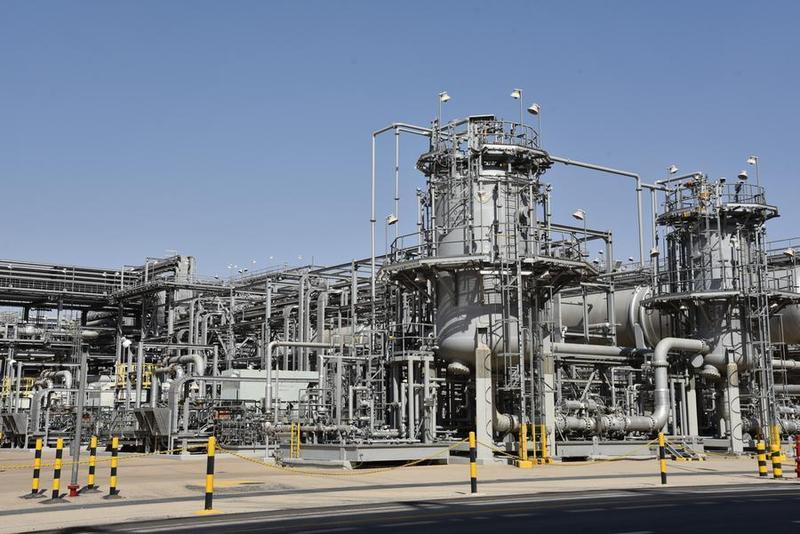
The ongoing conflict between the United States, Israel, and Iran is creating increasingly widespread ripple effects across the Middle East.
As a key hub of global energy supplies, escalating tensions in the region are forcing major oil producers to cut production or halt exports, sending shockwaves through the global energy market. The following outlines how key oil producers in the region are being affected by the U.S.-Israel-Iran conflict.
Iran
As a direct participant in the conflict, Iran’s oil production and transport have been severely disrupted since the outbreak of hostilities. The National Iranian Oil Refining and Distribution Company has said that the country’s energy infrastructure came under U.S.-Israeli attacks since Saturday night, with several oil depots in Tehran and Alborz provinces struck by missiles and set on fire. In a post on social media platform X on Sunday, Iran’s Parliament Speaker Mohammad Bagher Ghalibaf warned that the continuation of the war could severely disrupt oil production and exports in the West Asia region. Ghalibaf added that if the war continues, oil exports and production in the region could be severely affected, warning that not only U.S. interests but also those of other countries could be harmed by what he called the “delusions” of Israeli Prime Minister Benjamin Netanyahu.Despite Iran’s denial of closing the Strait of Hormuz, a vital chokepoint through which roughly 20 percent of the world’s oil shipments pass, recent attacks on multiple tankers in the strait have sharply curtailed shipping traffic, heightening concerns for the global energy market.
Saudi Arabia
Several oil-producing countries have also been affected by Iran’s strikes on U.S. military bases in the region. Saudi Arabia’s state oil giant Aramco shut down a refinery as a precautionary measure after it was hit by a drone on Monday.– On Saturday, Aramco announced that crude oil shipments are being temporarily redirected to Yanbu Port to enhance safety and the continuity of supplies for customers unable to access the Gulf, according to local Al Ekhbariya TV.
Kuwait
Kuwait’s major national oil company the Kuwait Petroleum Corporation (KPC) announced Saturday a precautionary cut in crude oil production and refining.Citing escalating regional tensions, the KPC said in a statement that the adjustment is “strictly precautionary” and that the company “remains fully prepared to restore production levels once conditions allow.” According to media reports, the company has declared force majeure due to threats against the passage of vessels through the Strait of Hormuz, continued attacks on Kuwait, and the “near-total” absence of available ships to transport crude oil and petroleum products from the Gulf.
Qatar
Qatar’s state-run energy firm QatarEnergy has announced force majeure following attacks Wednesday on two of its main facilities during the ongoing conflict between Iran and the U.S.-Israeli coalition. “Further to the announcement by QatarEnergy to stop production of liquefied natural gas (LNG) and associated products, QatarEnergy has declared Force Majeure to its affected buyers,” the company said in a statement. On Monday, Qatar halted LNG production after Iranian strikes prompted precautionary shutdowns. Qatar supplies roughly 20 percent of global LNG. Qatari Energy Minister Saad Sherida Al-Kaabi has said that ongoing Mideast conflict could force Gulf exporters to halt production within days if the Strait of Hormuz is closed, driving oil to 150 U.S. dollars per barrel within two to three weeks and severely damaging global economies.
The United Arab Emirates
The Abu Dhabi National Oil Company (ADNOC), an oil giant of the United Arab Emirates, announced on Saturday that it is “managing” offshore output levels to address storage requirements amid the regional conflict.”This approach preserves operational flexibility and will enable the company to resume normal operations without prolonged delay,” ADNOC said in a statement.
Iraq
Iraq’s oil production has dropped by nearly 60 percent due to the regional conflict, an Iraqi official said on Sunday. Production currently stands at about 1.3 million barrels per day, down from around 3.3 million barrels before the outbreak of the conflict, Kazem Abdul Hassan Karim, an official from the Iraqi Oil Ministry, said in a statement. On Friday, the ministry of natural resources of Iraq’s semi-autonomous Kurdistan region said that a “terrorist attack” on an oil field in the region’s Duhok province has led to the suspension of its production. A ministry statement said the facility, operated by the U.S.-based HKN Energy Company in the Sarsang area, sustained damage during the attack-KBC.
The National Assembly has dismissed reports that the Sacco Societies (Amendment) Bill, 2025, is being rushed through Parliament, saying the proposed law is still undergoing public participation.
Through infographics shared on Facebook on Tuesday, July 14, 2026, Parliament said misleading information had been circulating online about the Bill, formally known as the Sacco Societies (Amendment) Bill, National Assembly Bill No. 32 of 2025.
“Lately, there’s been a lot of misleading information circulating online about the Sacco Societies (Amendment) Bill. Let’s cut through the propaganda with the actual facts,” Parliament said.
Bill was published in June 2025
The National Assembly said the Bill was published on June 30, 2025, and had remained under consideration for more than 12 months.
It rejected suggestions that lawmakers were fast-tracking the proposed amendments without allowing enough time for scrutiny.
According to Parliament, the lengthy period between the publication of the Bill and its current consideration shows that it is not being rushed.
Bill currently before the National Assembly committee
The Sacco Societies Amendment Bill is currently before the National Assembly’s Departmental Committee on Trade, Industry and Cooperatives.
The committee is conducting public participation and receiving views from members of the public and other stakeholders.
The submissions are expected to help the committee assess the proposed amendments before presenting its recommendations to the National Assembly.
What happens after public participation?
After the public participation process is concluded, the committee will prepare a report containing its findings and recommendations.
Parliament said the views submitted by members of the public and stakeholders could inform further amendments to the Bill.
The proposed legislation will then proceed to the National Assembly for consideration by MPs.
This means the Bill has not yet completed the legislative process and could still be amended based on the submissions received during public participation.
Bill will be forwarded to Senate
The National Assembly also clarified that the Bill will not proceed directly for presidential assent after being passed by MPs.
Because the proposed legislation concerns county governments, it will be forwarded to the Senate for consideration in accordance with the Constitution.
The Senate will be required to consider the Bill before it can complete the parliamentary process and be presented for presidential assent.
Parliament urged members of the public to rely on verified information about the Sacco Societies Amendment Bill instead of unconfirmed reports circulating online-PeopleDaily.Digital.
NAIROBI, Kenya, July 14 – A growing shift towards digital property searches is changing how Kenyans find rental homes, with real estate technology platform Reemio positioning itself as a solution to longstanding challenges.
This included fraudulent listings, costly house searches and limited market transparency.
As younger, tech-savvy consumers turn to online platforms to make purchasing decisions, the company says digitizing the rental process could improve efficiency for both tenants and landlords while lowering transaction costs.
Reemio Head of Business Njoki Kimani said the platform was created to eliminate many of the frustrations associated with conventional house hunting by connecting verified landlords and renters through a digital marketplace.
“Our niche is to solve the problem of house hunting and also bring trust into that process. We use technology to connect renters and landlords,” said Kimani.
Kimani said the platform seeks to address inefficiencies that have traditionally made house hunting expensive and time-consuming.
Instead of physically visiting multiple properties, users can browse verified listings, take virtual tours, compare amenities and access information on additional costs such as water charges, electricity bills and service fees before scheduling physical viewings.
“The digital space has become the next logical place for house hunting. We’re removing the stress of moving from one house to another physically while helping people avoid misleading listings and unnecessary costs.”
Beyond improving convenience for tenants, Reemio argues that technology can help landlords reduce marketing costs, shorten vacancy periods and reach a wider pool of prospective tenants, including Kenyans living abroad.
The company says its platform also generates market data that can help property owners and developers better understand evolving consumer preferences, although its long-term impact will depend on wider adoption of digital property platforms and continued investment in trustworthy online real estate marketplaces-Capitalfm.co.ke.
The Office of the Registrar of Political Parties (ORPP) has issued a notice for the provisional registration of two proposed political parties, opening a seven-day window for members of the public to lodge objections.
In a notice published by the Registrar of Political Parties and Chief Executive Officer J.C. Lorionokou, the ORPP announced that the Social Democratic Party of Kenya (SDP) and the People’s Alternative Voice (PAV) are in the process of being provisionally registered under Section 5(2)(a) of the Political Parties Act.
The ORPP, a State office established under Section 33 of the Political Parties Act and Article 260 of the Constitution, said its mandate includes registering and regulating political parties as well as administering the Political Parties Fund.
According to the notice, the Social Democratic Party of Kenya (SDP) has adopted pink, white and sky blue as its official party colours, with the slogan “Change – Mageuzi.” The party’s symbol is the acronym SDP enclosed inside a circle.
The party’s listed founder members are Nyangong’ Duncan Nyumbah, Omwandasi Jared Dishon and Kinyua Mary Wacuka.
The second proposed party, People’s Alternative Voice (PAV), has adopted purple, gold and white as its official colours. Its party symbol is a shofar, while its slogan is “Sauti Mbadala-Haki, Usawa na Maendeleo.”
The founders of PAV are listed as Odenyo John Fitzgerald Elly, Nyando Rachel Mmboga and Ali Hussein Kiplangat.
The Registrar said particulars of the two proposed political parties have been published on the ORPP website to facilitate public scrutiny as required by law.
Any person wishing to oppose the provisional registration of either party has seven days from the date of publication of the notice to submit objections either in writing or in person to the Office of the Registrar of Political Parties at Lion Place, Fourth Floor, Waiyaki Way at Karuna Close, Nairobi.
The provisional registration marks the first step in the legal process of establishing a political party in Kenya.
After meeting the statutory requirements set out in the Political Parties Act, including demonstrating national character and fulfilling membership thresholds, the parties may apply for full registration, which grants them legal recognition to field candidates in elections and access benefits available to registered political parties.
Kenya has 91 fully registered political parties. The ORPP’s updated register indicates that, as of January 2026, there were 91 parties that had met the legal requirements for full registration under the Political Parties Act-STAR.