
News
Ruto signs laws reforming CBK operations, parliamentary pensions

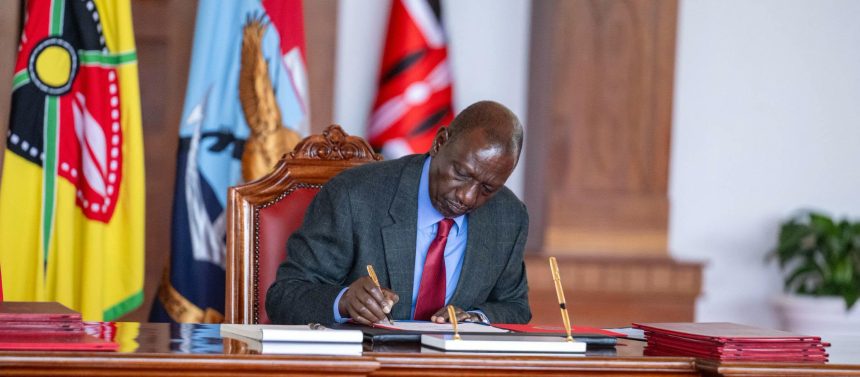
President William Ruto has signed into law the Central Bank of Kenya (Amendment) Bill, 2026, introducing comprehensive reforms designed to strengthen Kenya’s financial system, enhance banking oversight, and improve the country’s capacity to respond to financial crises.
The new legislation establishes a clear legal distinction between the Central Bank of Kenya’s routine monetary policy operations and Emergency Liquidity Assistance (ELA). This provides a dedicated framework for addressing periods of financial distress while protecting public resources.
According to President Ruto, the reforms are intended to enhance Kenya’s preparedness for financial shocks by ensuring emergency support is only provided under clearly defined circumstances.
“The new law introduces a distinct legal framework separating the Central Bank’s routine monetary policy operations from Emergency Liquidity Assistance (ELA). The move will improve Kenya’s preparedness to respond to financial crises while protecting taxpayers and the banking sector.” he said after signing the bill into law

Under the amendments, emergency liquidity will only be accessible to financial institutions that meet strict requirements regarding solvency, long-term viability, and systemic importance.
“Under the amendment, ELA can only be extended to banks that meet strict conditions on solvency, viability, and systemic risk. The provision aims to separate ordinary liquidity management from extraordinary interventions during periods of financial distress.” he said
The law further grants statutory recognition to the Central Bank of Kenya Institute of Monetary Studies, providing a legal basis for the institution’s training role and facilitating collaboration with regional and international partners to strengthen research, professional development, and knowledge exchange.
Another amendment aligns the Central Bank Act with Kenya’s current financial architecture by replacing references to the former Deposit Protection Fund Board with the Kenya Deposit Insurance Corporation.
Additionally, the legislation clarifies the Central Bank’s authority to hold and trade in gold and other precious metals as part of reserve management.
“It also expands legal clarity on CBK’s authority to deal in gold and other precious metals as part of reserve management. This will support the growth of Kenya’s mining sector and aligns Kenya with practices in Tanzania, Ghana, and South Africa.”
At the same time, President Ruto also assented to the Parliamentary Pensions (Amendment) Bill, 2023, which updates Kenya’s parliamentary pension framework to reflect the country’s bicameral Parliament established under the 2010 Constitution. The new law formally extends pension benefits to members of both the National Assembly and the Senate, ensuring senators are covered under the same legal framework as Members of Parliament.
Key reforms include raising the legal definition of a child eligible for benefits from 16 to 18 years, in line with the Constitution, and reconstituting both the Parliamentary Pensions Management Committee and the Appeals Committee to include representation from both Houses of Parliament.
The law also preserves the existing public service pension policy by retaining gratuity payments only for legislators who serve less than five years.
The Head of State that the legislative changes are intended to strengthen financial governance, modernise Kenya’s monetary policy framework, and align public institutions with constitutional and international best practices-KCB.


National Assembly dismisses claims Sacco Bill is being rushed through Parliament

Digital house-hunting platform bets on technology to reshape Nairobi’s rental market

ORPP edges two parties closer to joining Kenya’s political arena

Prime suspect in Nyeri woman bizarre killing detained for 21 days

Caroli Omondi accuses State of using plainclothes officers as goons

Sossion asserts goons are paid by politicians across political divide

Government urges women to form groups, tap enterprise fund for growth

Kenya, US deepen health partnership to accelerate UHC

Eldoret City To Host 2026 Mashujaa Day Celebrations

Peaceful Polls Crucial for Tourism, Investor Confidence, Miano Says

KAA commends mediation efforts that ended airport workers’ strike

Court Halts NTSA’s Instant Fines System Pending Further Review

Kasait rises from the tarmac to rule Daegu in marathon debut

Stephanie Ruto Donates K Sh 3m to St. Mary’s Mbuini Rehabilitation Centre: “From My Father”

US judge dismisses Trump defamation suit against Wall Street Journal
Kenya Met Lists Central Kenya, Western Among Regions to Receive Rains for Next 5 Days

Sierra Leone awards top national honour to retired Kenyan General Daniel Opande

Inside the Alleged Tender Fraud Web: Questions Mount Over KeRRA Manager Calvince Thomas and Contractor Complaints

Azimio Removes Junet Mohamed as Parliamentary Group Leader

Gov’t directs sub-counties to set up flood emergency response centres
-
 News5 months ago
KAA commends mediation efforts that ended airport workers’ strike
-
 News4 months ago
Court Halts NTSA’s Instant Fines System Pending Further Review
-
 News5 months ago
Kasait rises from the tarmac to rule Daegu in marathon debut
-
 News5 months ago
Stephanie Ruto Donates K Sh 3m to St. Mary’s Mbuini Rehabilitation Centre: “From My Father”
-
 News3 months ago
US judge dismisses Trump defamation suit against Wall Street Journal
-
News5 months ago
Kenya Met Lists Central Kenya, Western Among Regions to Receive Rains for Next 5 Days
-
 News5 months ago
Sierra Leone awards top national honour to retired Kenyan General Daniel Opande
-
 News5 months ago
Inside the Alleged Tender Fraud Web: Questions Mount Over KeRRA Manager Calvince Thomas and Contractor Complaints