
News
Nairobi Commuters to Pay Up to Ksh50 More as Matatu Fares Jump 25% on High Fuel Prices

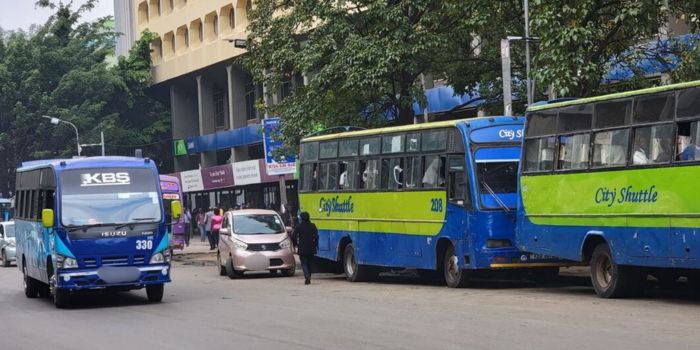
Commuters in Nairobi and other parts of the country are set to pay higher fares after the Matatu Owners Association announced a 25 per cent fare increase.
In a press briefing on Wednesday, April 15, a day after the Energy and Petroleum Regulatory Authority (EPRA) increased petrol and diesel prices by Ksh28 and Ksh40, respectively.
The owners argue that the recent hike, especially in diesel prices, is unsustainable for them as operators, noting that it has eaten into their daily earnings, forcing them to adjust fares to remain in operation.
“We agreed that we are going to increase fares by 25 per cent. If you check, for example, in Nairobi, the vehicle gives you about Ksh 8,000 per day, and an increase of diesel by Ksh 40 is going to take almost Ksh 2,400 per vehicle per day and so our profit is going to go down,” a representative of the association said.

“We are urging members of the public to understand that it is not our wish to go that direction. It is above us. We are urging the government to bring back the subsidy,” the official added.
The adjustment is expected to immediately affect common routes across the country, especially in Nairobi and its surrounding estates.
New Matatu Fares
For many commuters who rely on matatus daily, the 25 per cent fare increase translates into hundreds of shillings more in weekly transport expenses at a time when households are already grappling with the high cost of living.
On Thika Road, commuters who typically pay a flat rate of about Ksh100 during rush hours will now part with approximately Ksh125 following the hike. This will affect residents of Roysambu, Mirema, Garden City, Kasarani, Mwiki, Githurai, and Zimmerman, who rely heavily on public transport to access the Nairobi CBD daily. Off-peak fares that previously stood at around Ksh70 on the same route could also rise to roughly Ksh90, further tightening commuter budgets.
Generally, in Nairobi, fares that currently stand at Ksh80 from the CBD to Kawangware, Kibera, Kangemi, and parts of Mathare are expected to increase to about Ksh100. These routes are heavily used by workers, students, and small-scale traders, meaning the hike will significantly impact thousands of daily commuters.
Trips that cost Ksh100, such as those from Nairobi CBD to Nyayo Estate, Embakasi, Pipeline, and Donholm, are likely to increase to approximately Ksh125 to Ksh130. Similarly, commuters heading to areas such as Umoja, Kayole, and Komarock, who also pay within this range, will experience similar increases.
Routes currently charging around Ksh150, including those to Rongai, Ngong, Ruaka, Kikuyu, and Thika during peak hours, could jump to nearly Ksh190 following the 25 per cent adjustment. This will particularly affect workers who travel long distances into the city daily.
Commuters of shorter routes will likely not be spared as trips that currently cost Ksh50, such as those between CBD and South B, South C, Industrial Area, and Westlands during off-peak hours, could increase to about Ksh60 to Ksh65. Meanwhile, short-distance fares of around Ksh30 in areas such as Eastleigh, Ngara, Pangani, and Parklands could rise to roughly Ksh40.
Besides the daily commuters, several operators, especially those on Nairobi-to-upcountry routes, have also adjusted their fares following the fuel price hike.
Travel costs from Nairobi to Migori, for some bus companies, have increased from around Ksh1,400 to Ksh1,800 following EPRA’s latest fuel review. The cost of travel from Nairobi to Mombasa has also risen to about Ksh2,000 from around Ksh1,500, while fares from Mombasa to upcountry destinations have climbed to approximately Ksh3,000 from Ksh2,500.
Before the official communication from matatu owners, commuters have constantly raised complaints about what they say are some matatu fares above the set 25 per cent increase, raising questions on how the figure will be enforced.
The Matatu Owners Association is now calling on the government to consider reinstating fuel subsidies to cushion both operators and commuters from further financial strain.
They argue that without intervention, fare hikes may become frequent whenever fuel prices rise, further burdening Kenyans who depend on public transport for work, school, and business-Kenyans.co.ke.


National Assembly dismisses claims Sacco Bill is being rushed through Parliament

Digital house-hunting platform bets on technology to reshape Nairobi’s rental market

ORPP edges two parties closer to joining Kenya’s political arena

Prime suspect in Nyeri woman bizarre killing detained for 21 days

Caroli Omondi accuses State of using plainclothes officers as goons

Sossion asserts goons are paid by politicians across political divide

Government urges women to form groups, tap enterprise fund for growth

Kenya, US deepen health partnership to accelerate UHC

Eldoret City To Host 2026 Mashujaa Day Celebrations

Peaceful Polls Crucial for Tourism, Investor Confidence, Miano Says

KAA commends mediation efforts that ended airport workers’ strike

Court Halts NTSA’s Instant Fines System Pending Further Review

Kasait rises from the tarmac to rule Daegu in marathon debut

Stephanie Ruto Donates K Sh 3m to St. Mary’s Mbuini Rehabilitation Centre: “From My Father”

US judge dismisses Trump defamation suit against Wall Street Journal
Kenya Met Lists Central Kenya, Western Among Regions to Receive Rains for Next 5 Days

Sierra Leone awards top national honour to retired Kenyan General Daniel Opande

Inside the Alleged Tender Fraud Web: Questions Mount Over KeRRA Manager Calvince Thomas and Contractor Complaints

Azimio Removes Junet Mohamed as Parliamentary Group Leader

Gov’t directs sub-counties to set up flood emergency response centres
-
 News5 months ago
KAA commends mediation efforts that ended airport workers’ strike
-
 News4 months ago
Court Halts NTSA’s Instant Fines System Pending Further Review
-
 News5 months ago
Kasait rises from the tarmac to rule Daegu in marathon debut
-
 News5 months ago
Stephanie Ruto Donates K Sh 3m to St. Mary’s Mbuini Rehabilitation Centre: “From My Father”
-
 News3 months ago
US judge dismisses Trump defamation suit against Wall Street Journal
-
News5 months ago
Kenya Met Lists Central Kenya, Western Among Regions to Receive Rains for Next 5 Days
-
 News5 months ago
Sierra Leone awards top national honour to retired Kenyan General Daniel Opande
-
 News5 months ago
Inside the Alleged Tender Fraud Web: Questions Mount Over KeRRA Manager Calvince Thomas and Contractor Complaints