Connect with us

News

Finance Bill 2026: Parliament begins public participation exercise in 13 counties

Published

on

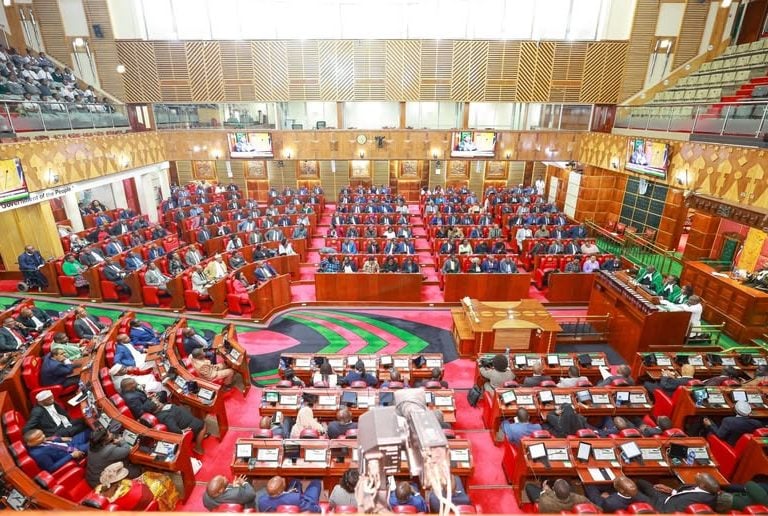
The Departmental Committee on Finance and National Planning of the National Assembly has kicked off a public participation nationwide process on the Finance Bill 2026 and three other bills that will shape the economic trajectory of the country.

In a statement on their social media handles on Tuesday, June 2, 2026, the parliament of Kenya noted the start of the public hearings, saying the programme will continue through June 8, 2026, in 13 counties. The exercise is a constitutional obligation of Parliament to enable citizens to be part of the legislative process before bills are debated and enacted into law.

The Finance Bill 2026 is one of four major bills being considered, the committee said in a notice. The committee has invited the public, stakeholders, civil society organisations, professional organisations, businesses, and community organisations to voice their opinions during oral presentations and written memoranda.

Public hearings schedule

The exercise is to be continued at the county level in Nairobi, Siaya and Makueni counties on Wednesday, 3rd June. The Nairobi residents will present their perspectives at the College of Insurance, South C, and the hearings for Siaya County will be conducted at Siaya Institute of Technology. Wote Greenpark Gardens will be the venue in Makueni County.

The committee will then proceed to Nyamira County, where residents will convene at the NG-CDF Hall, West Mugirango, on Thursday, 6th June. The public participation forums will be conducted concurrently in Bomet, Taita Taveta and Turkana counties at St Bakhita Youth Training Hall, Mwatate CDF Hall and Turkana University in Lodwar, respectively, on Friday, 5th June.

The hearings are set to be continued on Saturday, June 6, in Hola in Tana River County at the County Hall. The last step in the public participation exercise will be conducted on Monday, June 8, in Kilifi and Mombasa counties. The sessions will be held at the Coast Development Authority Hall in Kilifi and at Tononoka Social Hall in Mombasa, where residents will voice their opinions.

Ways to submit memoranda

Parliament has called upon Kenyans who may not be coming to the hearings to file written memoranda to the Departmental Committee on Finance and National Planning. They may be submitted by e-mail or via written submissions dropped off in the Office of the Clerk of the National Assembly, located at Parliament Buildings in Nairobi.

Further, the public can also submit their opinions electronically using the QR code that was sent in Parliament’s official notice.

The committee highlighted the importance of public participation in Kenya’s democratic governance system as being crucial in shaping laws that meet citizens’ needs and aspirations. The views gathered will feed into the committee’s report and recommendations before the Finance Bill 2026 is presented to the National Assembly for debate.

With discussions on taxation, economic growth, public spending, and fiscal policy in the national discourse, the public participation exercise gives Kenyans an important chance to shape the final Finance Bill 2026 and other proposed bills.

In the context of public participation, the Finance Bill 2026 is a governmental document that outlines the taxation policies and principles of the Kenyan government. ‘Finance Bill 2026 Public Participation’ refers to the public’s participation in the process of preparing the Finance Bill 2026, which is a document that introduces taxation policies and principles for the Kenyan government-PeopleDaily.Digital.

Continue Reading
Click to comment

Leave a Reply

Your email address will not be published. Required fields are marked *

News

National Assembly dismisses claims Sacco Bill is being rushed through Parliament

Published

on

The National Assembly has dismissed reports that the Sacco Societies (Amendment) Bill, 2025, is being rushed through Parliament, saying the proposed law is still undergoing public participation.

Through infographics shared on Facebook on Tuesday, July 14, 2026, Parliament said misleading information had been circulating online about the Bill, formally known as the Sacco Societies (Amendment) Bill, National Assembly Bill No. 32 of 2025.

Bill was published in June 2025

The National Assembly said the Bill was published on June 30, 2025, and had remained under consideration for more than 12 months.

It rejected suggestions that lawmakers were fast-tracking the proposed amendments without allowing enough time for scrutiny.

According to Parliament, the lengthy period between the publication of the Bill and its current consideration shows that it is not being rushed.

Bill currently before the National Assembly committee

The Sacco Societies Amendment Bill is currently before the National Assembly’s Departmental Committee on Trade, Industry and Cooperatives.

The committee is conducting public participation and receiving views from members of the public and other stakeholders.

The submissions are expected to help the committee assess the proposed amendments before presenting its recommendations to the National Assembly.

What happens after public participation?

After the public participation process is concluded, the committee will prepare a report containing its findings and recommendations.

Parliament said the views submitted by members of the public and stakeholders could inform further amendments to the Bill.

The proposed legislation will then proceed to the National Assembly for consideration by MPs.

This means the Bill has not yet completed the legislative process and could still be amended based on the submissions received during public participation.

Bill will be forwarded to Senate

The National Assembly also clarified that the Bill will not proceed directly for presidential assent after being passed by MPs.

Because the proposed legislation concerns county governments, it will be forwarded to the Senate for consideration in accordance with the Constitution.

The Senate will be required to consider the Bill before it can complete the parliamentary process and be presented for presidential assent.

Parliament urged members of the public to rely on verified information about the Sacco Societies Amendment Bill instead of unconfirmed reports circulating online-PeopleDaily.Digital.

Continue Reading

News

Digital house-hunting platform bets on technology to reshape Nairobi’s rental market

Published

on

NAIROBI, Kenya, July 14 – A growing shift towards digital property searches is changing how Kenyans find rental homes, with real estate technology platform Reemio positioning itself as a solution to longstanding challenges.

This included fraudulent listings, costly house searches and limited market transparency.

As younger, tech-savvy consumers turn to online platforms to make purchasing decisions, the company says digitizing the rental process could improve efficiency for both tenants and landlords while lowering transaction costs.

“Our niche is to solve the problem of house hunting and also bring trust into that process. We use technology to connect renters and landlords,” said Kimani.

Kimani said the platform seeks to address inefficiencies that have traditionally made house hunting expensive and time-consuming.

Instead of physically visiting multiple properties, users can browse verified listings, take virtual tours, compare amenities and access information on additional costs such as water charges, electricity bills and service fees before scheduling physical viewings.

Beyond improving convenience for tenants, Reemio argues that technology can help landlords reduce marketing costs, shorten vacancy periods and reach a wider pool of prospective tenants, including Kenyans living abroad.

The company says its platform also generates market data that can help property owners and developers better understand evolving consumer preferences, although its long-term impact will depend on wider adoption of digital property platforms and continued investment in trustworthy online real estate marketplaces-Capitalfm.co.ke.

Continue Reading

News

ORPP edges two parties closer to joining Kenya’s political arena

Published

on

The Office of the Registrar of Political Parties (ORPP) has issued a notice for the provisional registration of two proposed political parties, opening a seven-day window for members of the public to lodge objections.

In a notice published by the Registrar of Political Parties and Chief Executive Officer J.C. Lorionokou, the ORPP announced that the Social Democratic Party of Kenya (SDP) and the People’s Alternative Voice (PAV) are in the process of being provisionally registered under Section 5(2)(a) of the Political Parties Act.

The ORPP, a State office established under Section 33 of the Political Parties Act and Article 260 of the Constitution, said its mandate includes registering and regulating political parties as well as administering the Political Parties Fund.

According to the notice, the Social Democratic Party of Kenya (SDP) has adopted pink, white and sky blue as its official party colours, with the slogan “Change – Mageuzi.” The party’s symbol is the acronym SDP enclosed inside a circle.

The party’s listed founder members are Nyangong’ Duncan Nyumbah, Omwandasi Jared Dishon and Kinyua Mary Wacuka.

The founders of PAV are listed as Odenyo John Fitzgerald Elly, Nyando Rachel Mmboga and Ali Hussein Kiplangat.

The Registrar said particulars of the two proposed political parties have been published on the ORPP website to facilitate public scrutiny as required by law.

Any person wishing to oppose the provisional registration of either party has seven days from the date of publication of the notice to submit objections either in writing or in person to the Office of the Registrar of Political Parties at Lion Place, Fourth Floor, Waiyaki Way at Karuna Close, Nairobi.

The provisional registration marks the first step in the legal process of establishing a political party in Kenya.

Kenya has 91 fully registered political parties. The ORPP’s updated register indicates that, as of January 2026, there were 91 parties that had met the legal requirements for full registration under the Political Parties Act-STAR.

Continue Reading

Trending