
Connect with us

News

U.S. Places Uganda, DRC Among Countries on ‘Do Not Travel’ List

Published

on

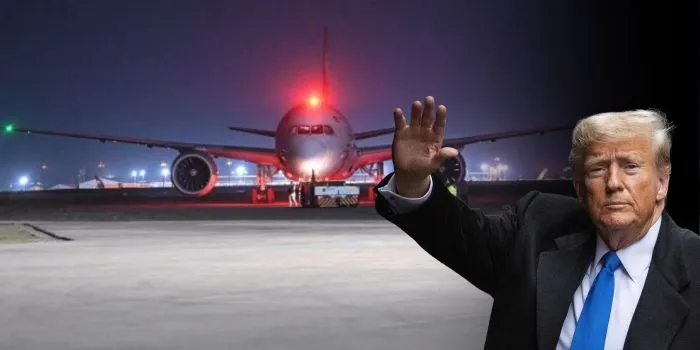
The United States Department of State Consular Affairs has placed Uganda and the Democratic Republic of the Congo (DRC) under its highest Level 4 “Do Not Travel” advisory as measures linked to the ongoing Ebola response intensify.

The advisory, issued on Wednesday, July 15, lists the two countries among destinations Americans have been warned not to visit for any reason.

“We issue Travel Advisories with Levels 1 – 4. Level 4 means Do Not Travel. We assign Level 4 based on local conditions and/or our limited ability to help Americans there. These places are dangerous. Do not go for any reason,” the advisory stated.

South Sudan, which borders both Uganda and the DRC, as well as the Central African Republic (CAR), which neighbours the DRC, is also under the same Level 4 advisory.

Other countries in the East African region that have been listed include Somalia and Sudan, while Kenya was notably not included among the countries designated under the highest travel warning.

Construction was halted after the government was found in contempt for disregarding an earlier court order suspending the works, following public protests and concerns over national biosafety.

The advisory comes as the U.S. introduces stricter measures for Americans departing the DRC following the ongoing Ebola outbreak.

Under the new policy, U.S. citizens leaving the DRC are required to spend 21 days in a third country before they can enter the United States, with similar restrictions applying to some travellers from Uganda and South Sudan.

According to the World Health Organisation (WHO), the Ebola outbreak in the DRC, linked to the Bundibugyo strain, has recorded more than 1,900 confirmed cases and over 700 deaths, making it the third-largest on record-Kenyans.co.ke.

Continue Reading
Click to comment

Leave a Reply

Your email address will not be published. Required fields are marked *

News

Queue by 5pm? You’ll still vote, IEBC tells Ol Kalou residents

Published

on

With voting underway in the Ol Kalou parliamentary by-election, the Independent Electoral and Boundaries Commission (IEBC) has issued key reminders to voters, including how they will be identified, the secrecy of the ballot and who will still be allowed to vote after the official closing time.

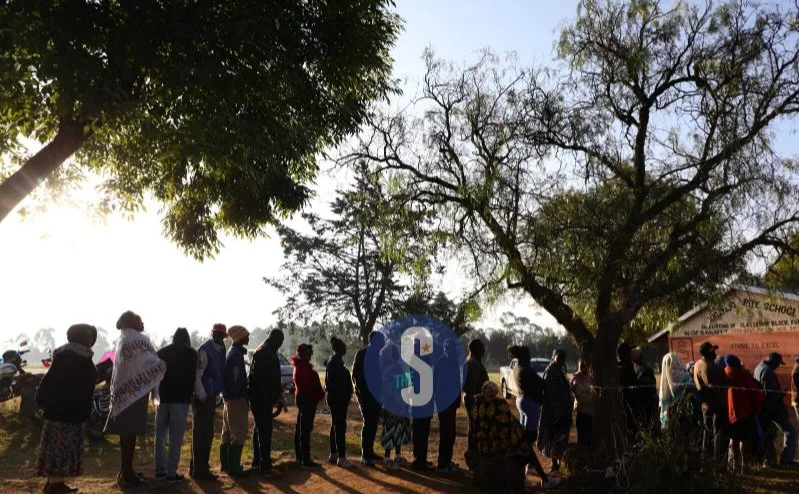
Polling stations across the constituency opened at 6.00 am on Thursday, July 16, 2026, and are scheduled to close at 5.00 pm.

However, the commission said voters who are in the queue by the official closing time will still be allowed to cast their ballots.

The electoral agency added that any time lost during polling will be recovered at closing to ensure eligible voters are not disadvantaged.

Before receiving a ballot paper, the IEBC said all eligible voters appearing in the certified Register of Voters for the Ol Kalou by-election will be identified biometrically using the Kenya Integrated Elections Management System (KIEMS) kit.

The commission has also urged residents to take part in the electoral process peacefully.

“To all voters in the Ol Kalou by-election: your participation matters. We encourage you to turn out in large numbers and peacefully exercise your democratic right and vote for your preferred candidate,” the IEBC said.

“The Commission reiterates that the secrecy of the ballot is a constitutional right guaranteed under Article 38(3)(b) and 81 (e) (i) of the Constitution and is a fundamental principle of democratic elections,” the commission said.

It warned that photographing or recording a marked ballot paper is prohibited and amounts to an electoral offence.

“Any act that compromises this secrecy, including photographing or recording a marked ballot paper, undermines the integrity of the electoral process, exposes voters to undue influence, coercion, and vote-buying, and constitutes an electoral offence,” the IEBC said.

The Ol Kalou by-election is being held to fill the parliamentary seat left vacant following the death of Jubilee Party MP David Njuguna Kiaraho on March 29, 2026.

Counting is expected to begin after polling closes, once all voters who are in the queue by 5.00 pm have cast their ballots-STAR.

Continue Reading

News

Police confirm plainclothes officers in Ol Kalou, deny unmarked cars

Published

on

Central Regional Commander Joshua Nkanatha has denied claims that security officers are conducting operations in Ol Kalou using unmarked cars.

He said the use of cars without number plates is illegal and those found culpable will face the law.

“No police officer is driving an unmarked car, the DCI have their number plates, the police…, and even my car has a number plate,” he said.

Nkanatha was responding to claims by DCP deputy party leader Cleophas Malala that police officers are moving around in civilian clothing and unmarked cars to intimidate voters.

“We expect victory, but we have also seen so many vehicles running around without number plates. I think this is a concern that the police should take note of. Some of them are plain-clothes police officers, and their aim is to intimidate voters,” he said.

“Definitely the DCI officers are here with us and we know that they normally put of civilian clothing. So we can’t say we don’t have officers in civilian,” he said.

According to Nkanatha enough police officers have been deployed in all polling stations to provide security to voters.

Voting is currently underway in Ol Kalou and no major incidents have so far been reported-STAR.


Continue Reading

News

Sossion: Ruto has no time interfering in the affairs of Ol Kalou

Published

on

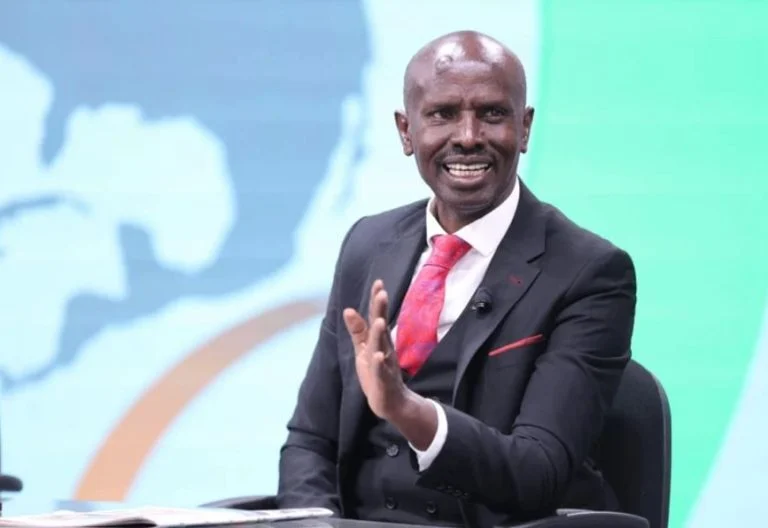
Former Kenya National Union of Teachers (KNUT) Secretary-General Wilson Sossion has defended the Independent Electoral and Boundaries Commission (IEBC)as the Ol Kalou by-election continues, dismissing claims of political interference and saying President William Ruto has no role in determining the outcome of a constituency contest.

In an interview on a local TV station on Thursday, July 16, 2026, Sossion said the people of Ol Kalou have the constitutional authority to choose their Member of Parliament and should be allowed to exercise their democratic right without interference from national political leaders.

His remarks come hours before the counting of votes, which has attracted national attention amid competing claims over electoral credibility and the independence of Kenya’s electoral institutions.

Sossion’s comments directly counter concerns raised by the Democracy for the Citizens Party (DCP), which has accused the IEBC of failing to guarantee a credible and transparent election process.

In a statement addressed to IEBC Chairperson Erastus Ethekon on Tuesday, July 14, 2026, DCP leader Rigathi Gachagua called on the commission to ensure that the Ol Kalou election is free, fair and verifiable.

“I write to address you in my capacity as a leader in this country and in my civic duty as a responsible citizen. Take note that an election is more about the process than the outcome,” Gachagua said.

The party claimed that public confidence in the electoral commission had declined and claimed that some Kenyans view the IEBC as being aligned with President Ruto’s administration.

“Your Commission is on a record high on low trust and image. From the outset, Kenyans hold the view that your commission and you are an appendage and part of Mr. William Ruto,” Gachagua stated.

DCP further raised concerns over the conduct of the by-election, claiming possible delays in issuing accreditation badges for party agents, late opening of polling stations in opposition-leaning areas, issuance of double ballot papers to some voters, and the deployment of plainclothes security officers to intimidate voters and party representatives.

The IEBC has maintained that it is committed to conducting a credible election and has the mandate to oversee a transparent process in line with Kenya’s electoral laws.

Sossion, while defending the commission, urged political actors to respect the independence of the IEBC and allow Ol Kalou residents to make their own decision through the ballot.

The Ol Kalou by-election is being closely watched as political parties seek to demonstrate their grassroots influence and test voter confidence ahead of future electoral contests-PeopleDaily.Digital

Continue Reading

Trending